
O-rings are one of the most widely used sealing components in industrial equipment. Their simple circular design makes them suitable for a wide range of static and dynamic sealing applications, from hydraulic and pneumatic systems to automotive, chemical processing, aerospace and consumer equipment.
Choosing the right O-ring, however, involves more than matching its size. Material compatibility, temperature, pressure, hardness, groove design, compression and operating conditions all affect sealing performance and service life.
This guide explains the key factors engineers and purchasing teams should consider when selecting an O-ring.
What Is an O-Ring?
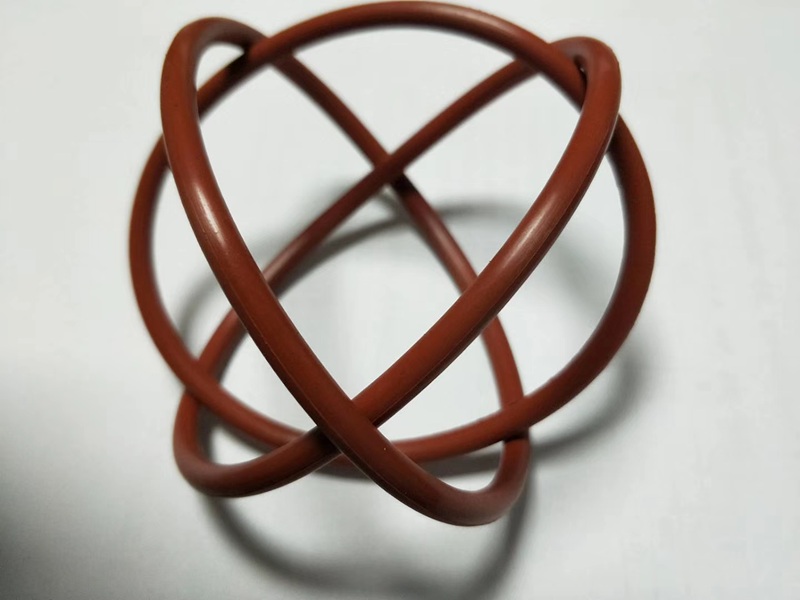
An O-ring is a circular elastomeric sealing ring with a round cross-section. It is typically manufactured from rubber or other high-performance elastomeric materials.
An O-ring creates a seal through its initial compression within the sealing groove. When system pressure is applied, the elastomer is further energized against the sealing surfaces, creating a self-energizing sealing effect that helps prevent fluid or gas leakage.
O-rings are commonly used for:
- Static sealing
- Reciprocating sealing
- Low-speed rotary applications
- Hydraulic and pneumatic systems
- Automotive equipment
- Chemical processing equipment
- Oil and gas equipment
- Semiconductor equipment
- General industrial machinery
The most suitable O-ring depends on the actual operating conditions rather than the application name alone.
The 5 Key Factors in O-Ring Selection
When selecting an O-ring, start with these five factors:
- Media compatibility
- Operating temperature
- System pressure
- O-ring size and groove design
- Static or dynamic movement
These factors should be evaluated together rather than independently.
1. Select the Right O-Ring Material
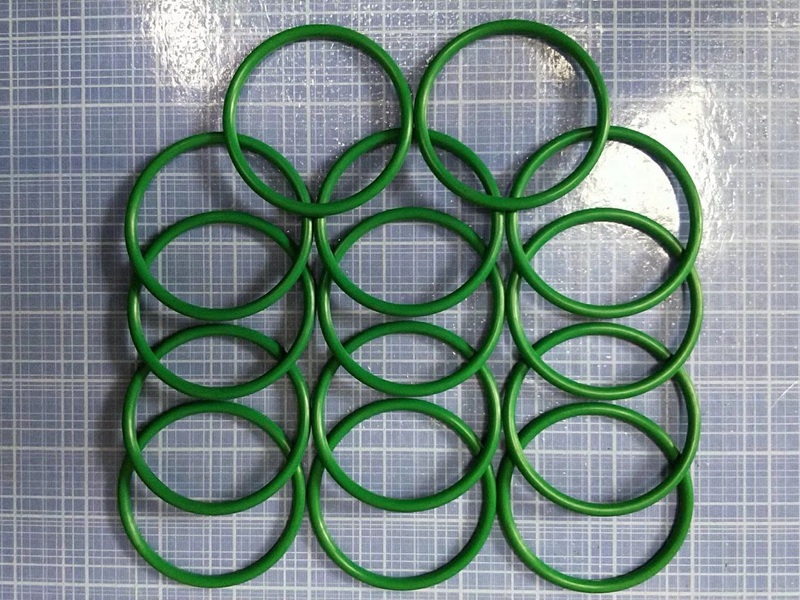
Material selection is one of the most important decisions because different elastomers have very different resistance to temperature, chemicals, oils, fuels, water and steam.
NBR — Nitrile Rubber
NBR is widely used for hydraulic and pneumatic sealing applications because of its excellent resistance to mineral oils and petroleum-based fluids.
Typical applications:
- Hydraulic systems
- Pneumatic equipment
- Automotive components
- General industrial machinery
Advantages:
- Good oil and fuel resistance
- Good mechanical properties
- Cost-effective
- Available in a wide range of hardness grades
NBR is generally not the first choice for high-temperature, ozone, weathering or aggressive chemical environments.
HNBR — Hydrogenated Nitrile Rubber
HNBR offers improved heat, ozone and aging resistance compared with conventional NBR while retaining good resistance to oils and fuels.
It is commonly considered for demanding automotive, oil and gas and industrial sealing applications.
FKM — Fluoroelastomer
FKM is widely used where higher temperature and chemical resistance are required.
Typical applications include:
- Automotive fuel systems
- Engine components
- Chemical equipment
- Oil and gas equipment
- High-temperature industrial applications
FKM provides excellent resistance to many oils, fuels and chemicals, although compatibility must always be checked against the specific medium and operating temperature.
FKM is generally not the preferred material for applications involving certain ketones, amines, hot steam or other incompatible media.
EPDM — Ethylene Propylene Diene Monomer
EPDM provides excellent resistance to:
- Hot water
- Steam
- Weathering
- Ozone
- Aging
- Many acids and alkalis
It is commonly used in:
- Water systems
- HVAC equipment
- Plumbing
- Outdoor applications
- Steam-related applications
One important limitation is its poor compatibility with petroleum-based oils and fuels.
Silicone Rubber — VMQ
Silicone rubber offers excellent flexibility over a wide temperature range and is commonly selected for applications requiring good low-temperature performance and temperature stability.
Typical applications include:
- Food-contact applications
- Medical and healthcare equipment
- Electrical components
- General industrial sealing
However, silicone generally has lower mechanical strength and wear resistance than many other elastomers and is not usually the first choice for high-pressure dynamic sealing.
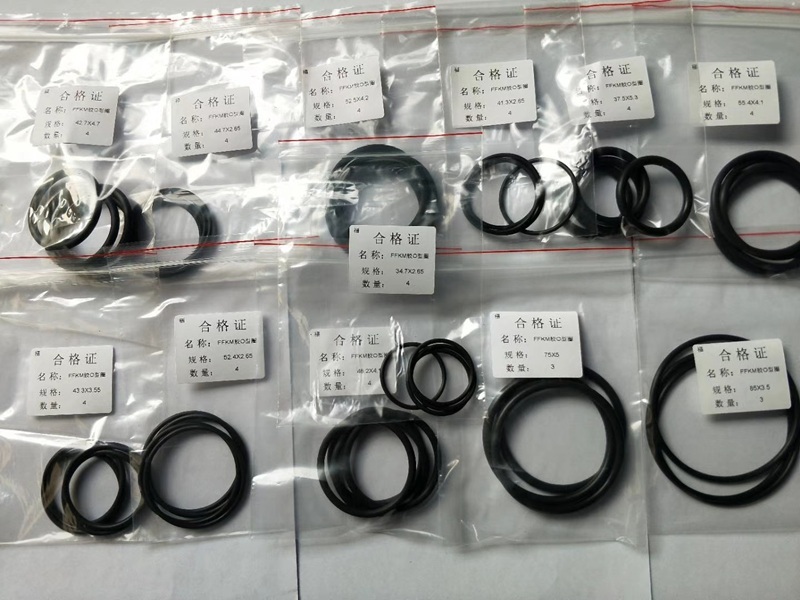
FFKM — Perfluoroelastomer
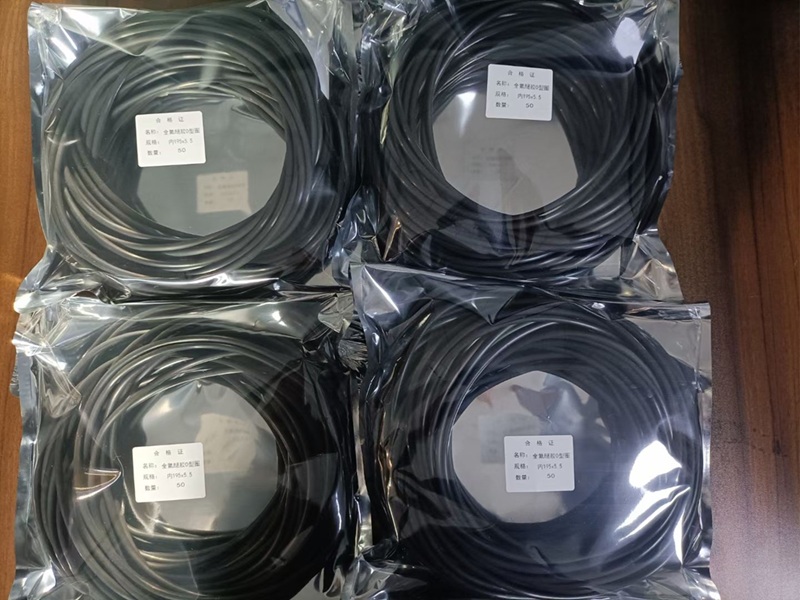
FFKM is a premium elastomer designed for highly demanding sealing environments.
It provides outstanding resistance to many aggressive chemicals and high temperatures and is widely used in:
- Semiconductor manufacturing
- Chemical processing
- Oil and gas
- High-purity equipment
FFKM is considerably more expensive than conventional elastomers, so it is normally selected when standard materials cannot meet the required operating conditions.
2. Consider the Operating Temperature
Temperature has a direct effect on O-ring performance.
The selected material should withstand both:
- The lowest operating or startup temperature
- The highest continuous operating temperature
Low temperatures can make an elastomer harder and less flexible, potentially reducing sealing performance.
Excessive temperatures can accelerate aging, hardening, softening, compression set and material degradation.
For this reason, do not select an O-ring based only on a material’s advertised maximum temperature. Consider the actual combination of:
Temperature + pressure + medium + exposure time + movement
3. Consider System Pressure
Pressure affects the risk of O-ring extrusion and seal failure.
As pressure increases, the elastomer can be forced into the clearance gap between mating components.
For higher-pressure applications, engineers may consider:
- Higher-hardness elastomers
- Smaller extrusion gaps
- Backup rings
- Optimized groove dimensions
- Appropriate gland design
Backup rings are commonly manufactured from materials such as PTFE and are used to reduce extrusion risk in high-pressure applications.
The exact requirement depends on pressure, temperature, material hardness, clearance and whether the pressure is unidirectional or bidirectional.
4. Select the Correct O-Ring Size
O-ring dimensions are normally specified by:
Inside Diameter (ID) × Cross-Section (CS)
For example:
7.5 × 1.8 mm
where:
- ID = 7.5 mm
- CS = 1.8 mm
The outside diameter can then be calculated from the inside diameter and cross-section.
When replacing an existing O-ring, measuring the gland is generally preferable to relying solely on a deformed or worn O-ring.
Important groove dimensions include:
- Groove diameter
- Groove width
- Groove depth
- Sealing clearance
- Surface finish
5. Understand O-Ring Compression
O-ring sealing performance depends heavily on the correct amount of squeeze.
Too little compression may result in leakage, particularly when the system is exposed to pressure fluctuations or dimensional tolerances.
Too much compression can increase:
- Friction
- Installation force
- Heat generation
- Wear
- Compression set
Typical squeeze requirements vary depending on whether the application is static or dynamic and should be determined according to the relevant design standard and gland geometry.
For this reason, squeeze should not be selected as a fixed percentage without considering the complete seal design.
Static vs. Dynamic O-Ring Applications
O-rings are commonly divided into two major application categories.
Static Sealing
There is no relative movement between the sealing surfaces.
Examples include:
- Flanges
- Covers
- Valves
- Pipe connections
- Hydraulic manifolds
Static applications generally allow greater squeeze than dynamic applications.
Dynamic Sealing
The O-ring experiences relative movement during operation.
Examples include:
- Hydraulic cylinders
- Pneumatic cylinders
- Reciprocating equipment
- Low-speed rotary shafts
Dynamic applications require careful consideration of friction, lubrication, surface finish, extrusion and wear.
O-Ring Standards
Several standards are commonly used for O-ring dimensions and tolerances.
ISO 3601
ISO 3601 is widely used internationally for O-ring dimensions, tolerances and quality requirements.
AS568
AS568 is widely used in North America and identifies standard O-ring sizes using Dash numbers.
JIS B 2401
JIS B 2401 is commonly used for Japanese industrial equipment and defines various O-ring size series.
When replacing an existing seal, always confirm which standard the equipment or drawing uses before selecting a replacement O-ring.
O-Ring Installation Best Practices
Even a correctly selected O-ring can fail if it is installed incorrectly.
Before installation:
- Remove burrs and sharp edges.
- Clean the groove and sealing surfaces.
- Check the O-ring for cuts, cracks or surface defects.
- Use a compatible lubricant when required.
- Avoid twisting the O-ring during installation.
- Prevent excessive stretching.
- Make sure the O-ring is correctly positioned in the groove.
The lubricant must be compatible with both the elastomer and the operating medium.
Common O-Ring Selection Mistakes
1. Choosing the material based only on temperature
A material may withstand the required temperature but still be incompatible with the actual fluid.
2. Selecting the wrong hardness
Hardness affects extrusion resistance, installation and dynamic performance.
3. Ignoring the sealing clearance
Even a high-performance elastomer can extrude when the clearance gap is excessive under high pressure.
4. Using a static-seal design for dynamic applications
Dynamic sealing requires additional consideration of friction, lubrication, surface finish and wear.
5. Selecting a replacement based only on the old O-ring
A worn or deformed O-ring may no longer represent its original dimensions.
O-Ring Material Selection at a Glance
| Material | Oil/Fuel Resistance | Temperature Resistance | Water/Steam Resistance | Typical Applications |
| NBR | Excellent | Good | Limited | Hydraulic, pneumatic, automotive |
| HNBR | Excellent | Very Good | Good | Automotive, oil & gas |
| FKM | Excellent | Excellent | Application-dependent | Automotive, chemical, oil & gas |
| EPDM | Poor | Excellent | Excellent | Water, steam, HVAC |
| VMQ | Limited | Excellent | Good | Food, medical, electrical |
| FFKM | Excellent | Outstanding | Application-dependent | Semiconductor, chemical, oil & gas |
Actual performance depends on the specific compound, formulation, hardness, operating conditions and media.
How to Choose the Right O-Ring
A practical selection process is:
Step 1 — Identify the sealing medium
Oil, fuel, water, steam, chemicals, gas or other media.
Step 2 — Determine the temperature range
Consider both minimum startup and maximum operating temperatures.
Step 3 — Determine the pressure
Check operating pressure, pressure peaks and clearance.
Step 4 — Determine movement
Static, reciprocating or rotary.
Step 5 — Select the elastomer
Compare NBR, HNBR, FKM, EPDM, VMQ, FFKM or other suitable materials.
Step 6 — Select hardness
Typically based on pressure, extrusion risk, movement and gland design.
Step 7 — Confirm dimensions
Check ID, cross-section, groove dimensions and applicable standards.
Step 8 — Validate the design
Where the application is critical, validate the selected material and seal design under actual operating conditions.
Need a Custom O-Ring?
For OEM and industrial applications, O-rings can be manufactured to customer drawings, dimensions, material specifications and performance requirements.
JYELASTOMER supplies O-rings in a wide range of elastomer materials, hardness grades and sizes for demanding applications across automotive, chemical processing, oil and gas, semiconductor and industrial equipment.
For custom applications, provide as much of the following information as possible:
- Drawing or dimensions
- Rubber material
- Hardness
- Operating temperature
- Operating pressure
- Sealing medium
- Static or dynamic application
- Required standard
- Color
- Certification requirements
Our engineering team can help evaluate the material and sealing requirements before production.
Need help selecting the right O-ring? Contact JYELASTOMER for a material and sealing recommendation.
